Frequently Asked Questions

Getting Started
What's the timeline from signing to first emails going out?

Roughly three weeks. In week one we purchase and configure your sending domains and start the email warm-up. Across the first two weeks we also run your kickoff call, write the messaging, and build your target lists, then launch at the start of week three. The gating factor is the two-week email warm-up, so the faster you get us the domains and onboarding information, the faster we can go live.

What do we actually need to provide?

A few things, ideally as early as possible: (1) A Do Not Contact list of customers, active opportunities, competitors, and anyone you know well. (2) The team members whose profiles we'll use for LinkedIn sending. (3) Fast turnaround on messaging review and approval, plus a recurring bi-weekly call. (4) Time for a kickoff call and messaging workshop. (5) Any context that helps us frame the value prop well — your ICP, what you've tried before, key differentiators.

What should go on the Do Not Contact list?

Existing customers, active opportunities, competitors, and anyone you have a close personal relationship with. You can give us specific email addresses or whole domains, but be careful with domains — blocking a domain blocks everyone there. If you work with a single scientist at Pfizer, don't block pfizer.com, just give us their email. If you're working with a ten-person startup, blocking the whole domain probably makes sense.

How does the messaging review process work?

We share a link where you can comment on, edit, and approve the messaging. Nothing goes out without your sign-off. Early on there's more back-and-forth to lock in positioning and value props; once we have a clear read on your ICP and what's working, we can run more autonomously. If you'd rather we roll through pre-approved campaigns without per-campaign sign-off, we can do that on your say-so.

Campaigns & Channels
How does LinkedIn outreach work alongside email?

LinkedIn runs as a parallel channel to email, usually targeting the same contact list or a prioritized subset. We connect through your team members' real profiles, so requests and messages are sent as the actual person. LinkedIn caps how many connection requests and messages you can send per week, so we deliberately stay under that limit, leaving headroom so your team can still use LinkedIn normally.

What are signal-based campaigns?

They're triggered by real-world events in the public domain: funding rounds, hiring, clinical trial milestones, leadership changes, drug approvals, press releases. We listen for the specific signals that matter to you and trigger outreach off the back of them, so the message lands when there's a real reason to reach out.

Can we add new campaigns mid-engagement?

Yes, and it's normal — we usually run multiple campaigns on an ongoing basis. The real work is prioritizing which matter most. Clients have run as many as 32 active campaigns at once across different segments, therapeutic areas, modalities, personas, and seniority levels. The goal is the right message in front of the right audience, however many campaigns that takes.

How do event campaigns work?

A couple of weeks before the event we scrape the speaker list and pull posters or abstracts, enrich the contact details, and start outreach to book meetings on-site. If the event app has a login, we can scrape the full attendee list and run pre-event outreach too. After the event we can set up a follow-up campaign for the people you didn't get to. We also have a tool for capturing leads and notes at the event itself.

Day-to-Day Operations
What happens when someone responds positively?

We run sentiment analysis on every reply. When someone responds positively, you get an email notification with the lead details, which campaign they came from, their LinkedIn profile and email, and a link into the master inbox where you can take over the conversation directly. Every positive response also shows up in the lead view in your client portal.

How are the bi-weekly check-ins structured?

Bi-weekly calls are about 30 minutes: performance, metrics, what's working and what isn't, new campaigns, messaging iteration, and ideas we want to test. We also run a monthly call that goes deeper on reporting; by then there's usually enough sending volume to see real signal on which audiences respond, which messaging angles land, and what's driving positive versus negative replies.

How do you handle out-of-office replies?

If someone replies that they're out of office, we pause them in the campaign so they don't get hit with messages while they're away, then re-engage when they're back. If a reply tells us someone has left the company, we automatically move them to the Do Not Contact list so we stop messaging them.

Can you help promote webinars or content?

Yes, and it's a critical part of outreach. Only about 5% of your market is in a buying window at any given time; the other 95% need education before they'll decide you're the right fit. Someone who wasn't ready in week one might be ready 6, 8, or 12 weeks later. Content and webinars do that work, and we can drive attendees and distribute content to keep you in front of that 95%.

Technical Setup
Why do we need separate sending domains?

Because we're sending cold email, some percentage will always get flagged as spam, and you don't want that landing on the domain you use with real customers. So we send from separate domains — either subdomains or lookalike domains — that redirect back to your main site, keeping your primary domain protected. If one of the sending domains ever gets blocked, we can spin up replacements quickly or shift volume to the unaffected ones.

Why does domain warm-up take two weeks?

To build a sending reputation with Google, Outlook, and security gateways like Mimecast, Proofpoint, and Barracuda — all of which judge you on how people interact with your emails. Cold email gets low reply rates by default, so sending from a brand-new domain burns it fast. During warm-up, inboxes sit in a pool sending and replying to each other so the aggregate reply rate looks healthy and authentic. We monitor deliverability metrics throughout and flag issues before they become problems.

Can you integrate with our CRM?

Yes. We use APIs to push positive responses into your CRM. We don't recommend sending every lead through, as that just clutters your CRM, so we route the positive responses only. Setting this up may need a technical person on your side or access to your CRM.

How does AI personalization work in the emails?

We pull data from multiple sources — company websites, LinkedIn profiles, publications, event talks, posters, and abstracts — then make it relevant to the specific reason we're reaching out. This isn't "ask ChatGPT to write an email." We run a roughly ten-part AI skill file trained on the millions of emails we've sent, built to draft messaging that doesn't read as AI, with safeguards to prevent hallucinations.

Lead Generation for Life Sciences

Powering Go-to-Market
for Life Science Companies

We build hyper-targeted outbound campaigns that generate qualified meetings with the right people in biotech and pharma.

See How It Works

Your Team

A dedicated team of life science outbound specialists. Everyone is a scientist by training, so we can keep up technically in pretty much every case.

Harrison Waid

Harrison Waid

Co-Founder

Nick Clare

Nick Clare

Co-Founder

Jess Evans

Jess Evans

Client Success and Operations Manager
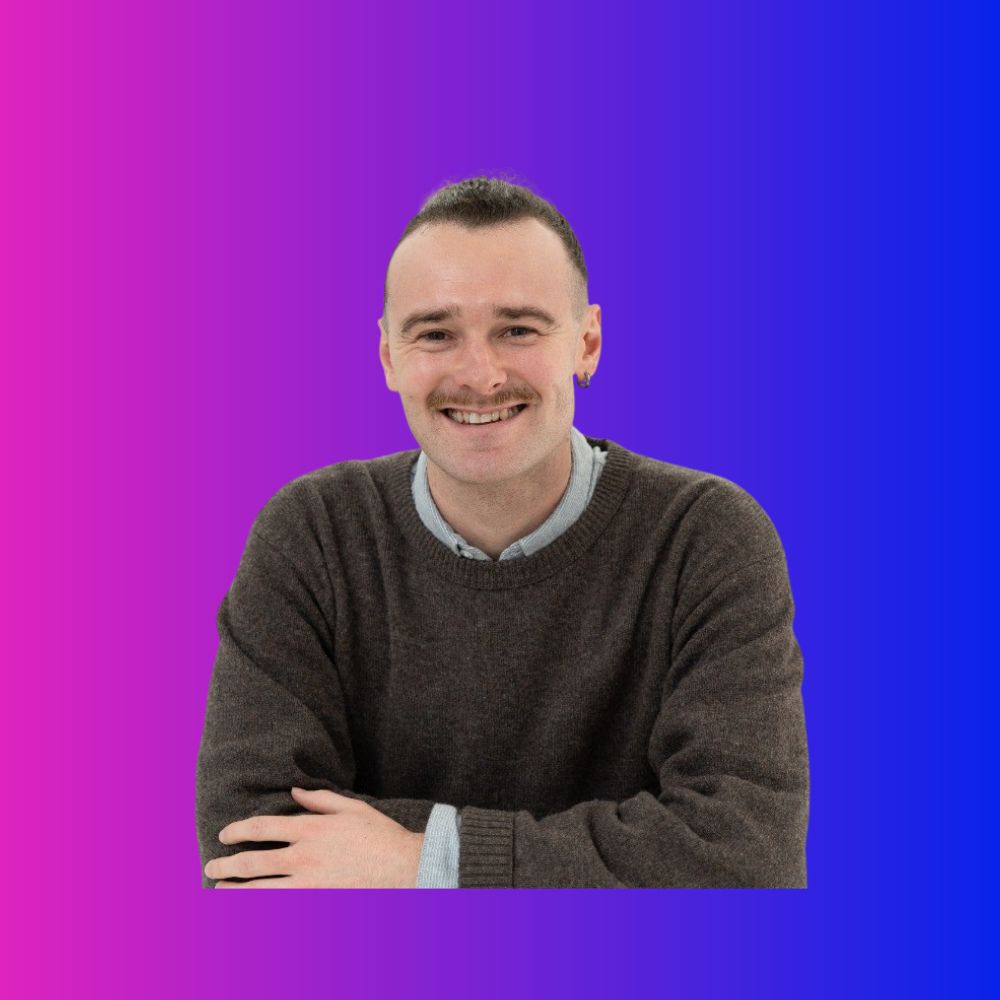
Divya Puri

Divya Puri

Client Success and Operations Manager

Keith Daly

Keith Daly

Client Success and Operations Manager

From Contract to First Campaign

We move fast. Most clients launch their first campaign within 3 weeks.

1
Week 1

Onboarding, Systems & Email Infrastructure

We set up everything you need to start running campaigns safely and effectively.

  • Email infrastructure: We buy and configure separate sending domains (e.g. yourcompany-bio.com) that route back to your main domain. This protects your primary email reputation from cold outreach.
  • Domain warm-up: New domains need at least 2 weeks of warm-up to build sender reputation before we can start sending at volume.
  • LinkedIn / HeyReach: We connect your team's LinkedIn profiles to our outreach tool. The more profiles we have, the more volume we can push on LinkedIn.
  • Client portal access: You get login to the portal where all responses, analytics, and campaign data live in one place.
  • Comms channel: We set up your preferred channel (Slack or email) for day-to-day communication.
We handle all the technical setup. You just need to provide sender names, connect LinkedIn accounts, and send over your Do Not Contact list.
2
Week 2

Messaging Workshop & Campaign Strategies

This is the deep-dive call where we get into the substance: your positioning, target markets, what makes you different, and what campaigns to run first.

  • ICP deep-dive: Who are we going after and why? We map out personas, company types, therapeutic areas, and modalities.
  • Campaign ideation: We'll bring ideas to the table and brainstorm together. What are the different angles, trigger points, and value props we can test?
  • Messaging approach: We figure out the right style for each campaign. Some lists work best with targeted templates; others need 1:1 personalization referencing specific programs, publications, or posters.
  • Event calendar: We map out any upcoming conferences, webinars, or events for pre/post-event campaigns.
Think of this as a strategy session. We come prepared with research on your space. You bring the domain expertise and we figure out the best angles together.
3
Week 2-3

Personalized Messaging & List Building

We build your target lists and write the outreach sequences. Everything gets shared for your review before launch.

  • List building: We pull from multiple databases and tools to build hyper-targeted lists. We can scrape clinical trials, publications, event apps, company websites, and more to find the right people.
  • Enrichment: Every lead gets enriched with personalized data points. We find verified emails, company details, and relevant context for personalization.
  • Messaging: We write multi-step sequences (email + LinkedIn) tailored to each campaign. For personalized campaigns, we'll show you 4-5 examples to review the approach before scaling.
  • Review: Lead lists and messaging get shared for your feedback. You have full transparency on exactly who we're reaching out to and what we're saying.
We're fully transparent. Any lead list we create, you have access to. Same with messaging. Think of us as an extension of your team.
4
Week 3

Launch 🚀

Campaigns go live. From here it's about monitoring, iterating, and scaling what works.

  • Campaigns activate: Outreach starts going out across email and LinkedIn. We monitor deliverability and performance from day one.
  • Instant notifications: When a positive response comes in, you get an email notification with the lead's details and their message. One click takes you to the portal to reply.
  • Bi-weekly check-ins: We meet regularly to review what's working, discuss new campaign ideas, and plan next steps.
  • Testing & iteration: We analyze which messages, segments, and angles are performing. Scale winners, kill underperformers, and test new approaches.
The single biggest factor in converting positive responses to meetings is speed to reply. We track median reply times and will flag if we see it slipping.

Next 2 Weeks

Here's what we each need to do to get your campaigns live.

What we need from you

Email sender names
Preferred comms channel
LinkedIn accounts to send from
Fill out Client Profile in the portal
Book messaging workshop
Initial campaign ideas
Upcoming events & webinars
Do Not Contact list
LinkedIn account connection

What to expect from us

Client portal login details
Email domain setup & warm-up
Comms channel setup
HeyReach / LinkedIn setup
Process documents for onboarding
Initial campaign ideas
Set up bi-weekly catch-up call
View full onboarding process document →

Three Types of Campaigns

We don't do generic email blasts. Every campaign is built around a specific strategy, audience, and angle.

General Campaigns

Highest volume

Hyper-targeted list building against your ICP. We go deep on specific modalities, therapeutic areas, company types, and personas.

This isn't "pull a list and blast it." We research companies, scrape websites, look at pipelines, and tailor messaging to each segment.

  • Target by company size or type
  • Target by therapeutic area or modality
  • Target by job title or function
  • CRM re-engagement campaigns

Event & Webinar Campaigns

Highest response rate

Events and webinars consistently outperform every other campaign type. We scrape attendee lists, speaker lists, poster presenters, and event apps.

Two modes: events you're attending (book in-person meetings) and events you're not (target the right audience for virtual meetings). Webinars work the same way as a softer first touch.

  • Pre-event outreach to book meetings
  • Post-event follow-up at scale
  • Webinar promotion campaigns
  • Events you wish you were attending
  • Reference specific posters or talks

Signal Campaigns

Reactive & timely

When something happens in the world that's relevant, we trigger outreach. Lower volume but highly relevant because there's a real reason to reach out.

We monitor public data and trigger personalized outreach when we spot signals that match your ICP.

  • Funding rounds & M&A activity
  • New program launches or pipeline changes
  • Leadership changes & promotions
  • Hiring patterns & layoffs

When a Positive Response Comes In

Here's exactly what happens when someone responds positively to your campaign.

Notification hits your inbox

We run sentiment analysis on every response. Positive replies (meeting requests, information requests) trigger an instant email notification with the lead's details, their message, and quick-action buttons.

Reply or categorize

Click through to the portal and respond directly. The master inbox shows every response from every channel (email + LinkedIn) in one view. Anyone on your team can reply as the original sender.

You can also see "not the right timing" or "contact me later" responses and follow up on those too. Some clients have had great results objection-handling these.

Book and hold the meeting

Schedule the call, have the conversation, and evaluate the opportunity. A qualified meeting is one where you'd put it into your CRM as an active opportunity.

Update the lead stage

Mark leads as Qualified or Not Qualified in the portal. This feeds back into our analytics so we can optimize campaigns based on what's actually converting to pipeline.

Do Not Contact List

This is a gating factor to launch. We won't start campaigns without it.

Send us email addresses or company domains of anyone you don't want us to reach out to. Format: Excel, CSV, or even just a list. As long as we have a name and email (or just a company name), we can work with it.

Include on DNC

  • Current customers
  • Active opportunities in your pipeline
  • Partners or investors
  • Competitors (domains)

Consider leaving off

  • Former customers (re-engagement opportunity)
  • Cold CRM leads who never responded
  • Old MQLs from webinars, etc.
  • Stale contacts you've lost touch with
Good to know: The DNC is enforced at the point of sending, not list building. So if you see a customer on a lead list, don't worry. They will be hard-blocked from actually receiving any outreach. You can also update the DNC list at any time.

Working Together

Two approaches work well. The middle ground is where things slow down.

Hands-off (trust the process)

You review the first few campaigns closely, get comfortable with the quality, and then let us run. Quick approvals, high trust, fast iteration.

  • Quick pass on messaging to confirm direction
  • Trust the list building and enrichment
  • Focus your time on responding to leads
  • We bring ideas proactively

Detailed review

You want to review everything with a fine-tooth comb. Totally fine, especially early on. The key is turning feedback around quickly.

  • Review every lead list and message
  • Deep involvement in campaign strategy
  • Quick turnaround on feedback is critical
  • Transition to hands-off as trust builds
Where things slow down: wanting to review every detail but being too busy to turn it around. If messaging review takes two weeks, campaigns stall. Pick your lane and we'll make it work.

What Our Best Clients Do

The habits that drive the strongest campaign results.

1
Have 1-2 people accountable for managing replies
2
Respond to positive leads quickly (speed to reply is the #1 factor)
3
Turn around messaging feedback fast so campaigns don't stall
4
Share upcoming events and webinars proactively (event campaigns perform best)
5
Bi-weekly meetings to discuss what's working and ideate new campaigns
6
Have a follow-up process for leads that aren't ready yet
7
Collaborative relationship: share ideas, feedback, and market context

Our End-to-End Process

From infrastructure to launch, here's what we build and manage for you.

Phase 1

Infrastructure

  • Buy sending domains
  • Create email inboxes
  • Warm up domains (2 weeks)
  • Connect LinkedIn profiles
Phase 2

Strategy

  • Define target profiles (ICP)
  • Generate unique offers
  • Write messaging sequences
  • Map event & webinar calendar
Phase 3

List Building

  • Pull custom lists from multiple sources
  • Enrich with personalized data
  • Segment into hyper-specific sub-lists
  • Verify emails & clean data
Phase 4

Launch & Optimize

  • Enroll leads in campaigns
  • Monitor deliverability
  • Real-time portal analytics
  • Iterate based on results

How We Optimize Campaigns

Outbound is iterative. Not every message lands on the first try, and that's by design. Here's how we test, learn, and scale what works.

1

Test multiple angles from the start

We launch with several messaging variants and audience segments. This gives us data fast. Within 2-3 weeks we can see which combinations are resonating and which need reworking.

2

Scale winners, iterate losers

High-performing segments get expanded. We build more lists, test new personas, and double down. Underperforming segments get new messaging, tighter targeting, or a different angle entirely.

3

Responses fuel the next campaign

Every reply (positive or negative) is intel. "Not the right person, try our VP of CMC" becomes a new lead. "We're evaluating this next quarter" becomes a timed follow-up. "We already use X" tells us about the competitive landscape.

Iteration is a core part of the process. Clients who see the best results are open to testing, share what they're hearing from the market, and give us room to try new approaches. The data always tells us where to go next.

Real Results

Anonymous case studies from real life science campaigns we've run.

Entering a New Market

930
Contacts
5.1%
Reply Rate
17
Positive
Needed to quickly prove to the board that their new offering was relevant. Targeted pharma leaders in toxicology.
Outcome: 8 new customer meetings in 3 weeks. Gave them the leading indicators needed for board confidence.

Finding a New Customer Base

85
Contacts
21.2%
Reply Rate
12
Positive
Creative approach: targeted academic core directors who didn't have access to latest sequencing technology.
Outcome: 7 meetings in 2 weeks (5 in week one). Signed their first customers from this new segment.

Pipeline Generation

1,274
Contacts
3.9%
Reply Rate
35
Positive
Segmented lists by product and application area with highly specific messaging for each. Goal: maximize meetings for the sales team.
Outcome: 35 positive replies turned into 28 meetings in one month.

Messaging & Market Testing

334
Contacts
4.5%
Reply Rate
9
Positive
Ran 4 campaigns in parallel to different market segments to find which messaging resonated most.
Outcome: Identified a winning market that performed 5x better than the other 3. Scaled outreach into that segment.

Book Meetings at Events

175
Contacts
3.4%
Reply Rate
6
Positive
Small niche event. Wanted to book meetings for a sales rep attending in person.
Outcome: 5 in-person meetings booked one week before the event, plus 1 virtual meeting.

Increasing New Customer Meetings

810
Contacts
3.8%
Reply Rate
11
Positive
Niche product with existing customers. Wanted to accelerate new customer growth through outbound.
Outcome: 5 new customer meetings in the first month, including Pfizer, Sanofi, and GSK.

Frequently Asked Questions

The questions every client asks before they start.

What's the timeline from signing to first emails going out?

Roughly three weeks. In week one we purchase and configure your sending domains and start the email warm-up. Across the first two weeks we also run your kickoff call, write the messaging, and build your target lists, then launch at the start of week three. The gating factor is the two-week email warm-up, so the faster you get us the domains and onboarding information, the faster we can go live.

What do we actually need to provide?

A few things, ideally as early as possible: (1) A Do Not Contact list of customers, active opportunities, and competitors. (2) The LinkedIn profiles we'll use for outreach. (3) Fast turnaround on messaging review and approval. (4) A recurring bi-weekly call. We handle everything else — domain setup, list building, messaging, campaign management, and reporting. Most clients spend 1–2 hours per week on reviews and check-ins.

Why do we need separate sending domains?

Because we're sending cold email, some percentage will always get flagged as spam, and you don't want that landing on the domain you use with real customers. So we send from separate domains — either subdomains or lookalike domains — that redirect back to your main site, keeping your primary domain protected. If one ever gets blocked, we spin up replacements quickly or shift volume to the unaffected ones.

Why does domain warm-up take two weeks?

To build a sending reputation with Google, Outlook, and security gateways like Mimecast, Proofpoint, and Barracuda — all of which judge you on how people interact with your emails. Cold email gets low reply rates by default, so sending from a brand-new domain burns it fast. During warm-up, inboxes sit in a pool sending and replying to each other so the aggregate reply rate looks healthy and authentic.

How does LinkedIn outreach work alongside email?

LinkedIn runs as a parallel channel to email, usually targeting the same contact list. We connect through your team members' real profiles, so requests and messages are sent as the actual person. LinkedIn caps how many requests and messages you can send per week, so we deliberately stay under that limit, leaving headroom so your team can still use LinkedIn normally.

What happens when someone responds positively?

We run sentiment analysis on every reply. When someone responds positively, you get an email notification with the lead details — which campaign they came from, their LinkedIn profile and email, and a link into the master inbox where you can take over the conversation directly. Every positive response also shows up in the lead view in your client portal.

Ready to Get Started?

Log into your portal to complete your profile, or reach out with any questions.